Hotline

090.113.0202

Wisdom Tooth Extraction

What is wisdom tooth extraction?

Wisdom tooth extraction is a minor surgical procedure to remove one or more wisdom teeth (the eighth teeth) that grow in the back of the mouth. Dentists or maxillofacial specialists extract wisdom teeth to prevent complications and minimize damage to surrounding teeth and tissues. Wisdom teeth usually appear between the ages of 17 and 25.
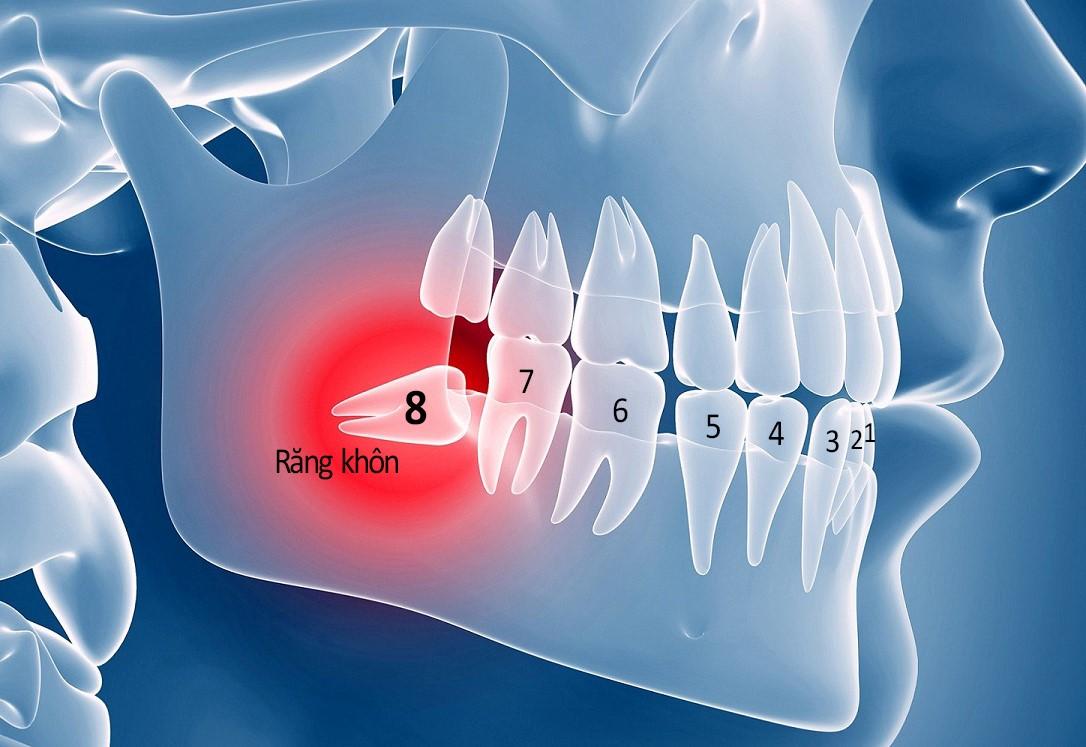
Tất tần tật kinh nghiệm nhổ răng khôn ai cũng cần biết

When is it necessary to extract wisdom teeth?

Some people have all four wisdom teeth erupt, while others may only have one, two, three, or even none at all. Wisdom teeth usually don’t need to be extracted if they erupt in the correct position and won’t cause any danger or complications to the oral cavity.

However, when wisdom teeth erupt incorrectly or haven’t fully erupted through the gum surface, they can cause oral problems. Food and bacteria can accumulate around the wisdom teeth, forming plaque and potentially leading to:

  • Tooth decay.
  • Gum disease (also known as gingivitis or periodontal disease).
  • Pericoronitis: a dental disorder that occurs when plaque infects the soft tissues surrounding a tooth.
  • Cellulitis: an acute infection caused by bacteria accumulating inside the cheek, tongue, or throat.
  • Abscess: a bacterial infection that causes pus to accumulate in a wisdom tooth or soft tissue.
  • Cysts and benign tumors: impacted wisdom teeth that have not yet erupted above the gum surface are prone to developing cysts.

Mild cases can be treated with antibiotics and antiseptic mouthwash. But when the condition worsens or other treatments are ineffective, the doctor will recommend wisdom tooth extraction.

  • Before: Both lower wisdom teeth were impacted horizontally, embedded in the bone, with the crown pressing against tooth number 7 → risk of cavities and pericoronitis.

  • After: The wisdom teeth have been completely extracted, the sockets are clean, and there is no longer any pressure on the adjacent teeth.

  • Before: Lower wisdom tooth was impacted – rotated, not fully erupted, and deeply embedded in the jawbone.

  • After: Wisdom tooth has been extracted, the alveolar bone is stable, and no damage to tooth number 7 is observed.

What are the current wisdom tooth extraction techniques in dentistry?

Currently, the two most widely used techniques are traditional wisdom tooth extraction and Piezotome extraction. Each method has its own advantages and disadvantages, and is suitable for different dental conditions.

1. Wisdom tooth extraction using traditional methods

In traditional techniques, dentists use mechanical instruments such as forceps and levers to open the gums, expose the tooth socket, and remove the tooth from the jawbone. This process requires the patient to keep their mouth open continuously for 30–40 minutes (depending on the difficulty of the tooth).

Advantage

  • Cost-effective: A suitable option for many patients needing simple tooth extractions.
  • Prices typically range from 800,000 to 2,000,000 VND per tooth, varying depending on the tooth’s location and the specific clinic.

Easy to perform, most dental clinics can apply this technique.

Limit

  • Patients have to keep their mouths open for extended periods, which can easily cause jaw fatigue.
  • Bleeding and pain after extraction last longer compared to modern techniques.
  • The risk of swelling, inflammation, or infection is higher if the procedure is not performed skillfully.
  • It is not truly optimal for cases of complex wisdom tooth eruption.

2. Wisdom tooth extraction using the Piezotome machine – Modern, gentle technology.

Piezotome is a device that uses ultrasound waves with an extremely small cutting tip (0.2 – 0.5 mm), allowing dentists to perform precise procedures without damaging surrounding soft tissue. This technology is currently preferred by many advanced dental clinics.

Operating mechanism

  • Using micro-vibrating ultrasound waves to selectively cut bone, without heating the bone or affecting soft tissue.

  • The device acts around the tooth root, gently severing the ligaments to make tooth removal easier.

  • Combining the crown-root sectioning method minimizes trauma.

Outstanding advantages

  • Minimal pain, minimal bleeding, mild numbness, and a comfortable feeling.

  • Reduces swelling by 40–60% compared to traditional methods.

  • Healing time is 2–3 times faster, reducing post-extraction complications.

  • High safety level, does not cause damage to surrounding structures.

  • Particularly suitable for the following cases:

    • Wisdom teeth that are impacted deep within the jawbone.

    • Misaligned or horizontally growing teeth

    • Teeth with multiple roots or abnormally shaped roots.


Which method should I choose?

  • Traditional wisdom tooth extraction is suitable if the wisdom tooth is growing straight, is simple to remove, and you want to save money.

  • Piezotome is the optimal choice for complex cases, or if you prioritize pain relief, complication reduction, and rapid recovery.

At our dental clinic, we always provide thorough examinations, X-rays, and consultations to help you choose the most suitable tooth extraction method for your situation.

related articles